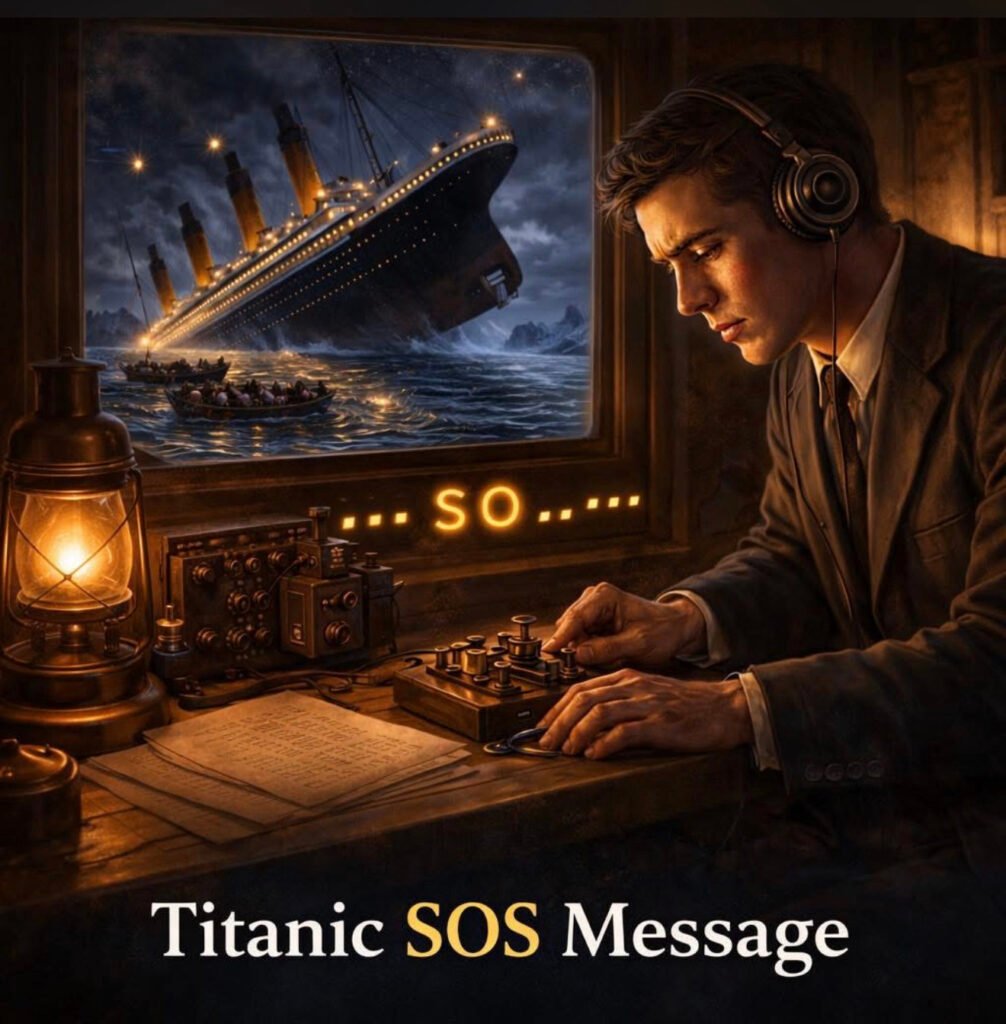
Jack Phillips — the man
Born April 11, 1887 — he celebrated his 25th birthday the day after Titanic departed. He was just a kid.
The night it happened
Bride had gone to bed early to relieve Phillips at midnight. The Titanic hit the iceberg at 11:40pm. Bride woke up, Phillips said they had struck something, and Captain Smith came in shortly after telling them to send out a distress signal.
The SOS detail — this is gold
At one point Bride half-jokingly told Phillips “Send SOS — it’s the new call, and it may be your last chance to send it.” Jack sent the first SOS signal ever at 12:45 AM, April 15, 1912.
The dark irony
Earlier that night Phillips had gotten so annoyed at constant ice warnings from another ship that he told their operator in Morse code to “shut up” so he could keep sending passenger messages.
His last transmission
Phillips typed out Titanic’s last message — “Come quick. Engine room nearly full.” — before going silent for good.
How he died
Harold Bride later said: “I will never live to forget the work of Phillips during the last awful 15 minutes. I suddenly felt a great reverence to see him standing there sticking to his work while everybody else was raging about.” Bride later saw Phillips’ body clinging to debris from the sunken ship. He died from exposure.
His legacy
The Titanic disaster led directly to the Radio Act of 1912, which required 24-hour radio service on ships and had the US adopt SOS as its standard distress call.