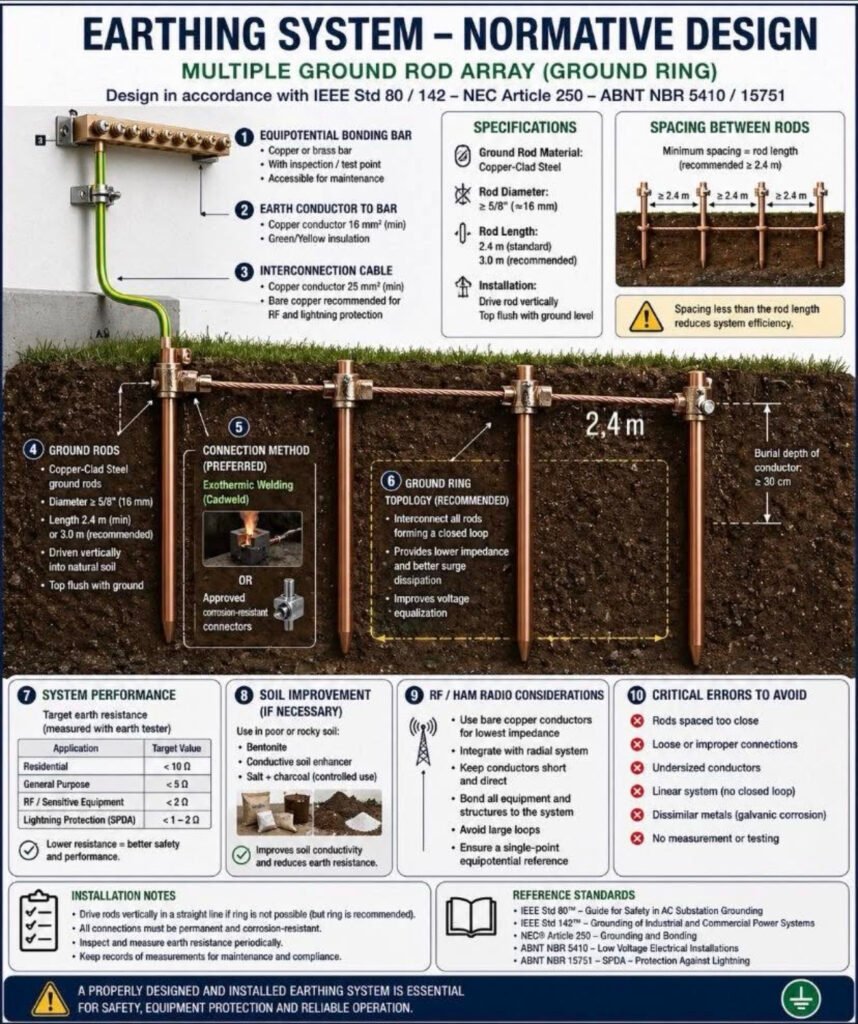
When you look at a grounding system like this—multiple rods connected in a ring—it might seem like overkill at first. But in ham radio, this is exactly the kind of setup that separates a “working station” from a reliable and safe station.
In practice, grounding isn’t just about sticking a rod in the ground. It has three very clear roles: protecting you from electrical faults, safely dissipating lightning energy, and providing a stable reference for RF currents . When you build a ground ring with several interconnected rods, you’re essentially creating a low-impedance path that spreads energy into the soil much more efficiently than a single rod ever could.
That makes a real difference on the air. A well-designed grounding system helps reduce unwanted noise and interference, improves signal stability, and keeps RF where it belongs—out of your shack and in the antenna . Especially with vertical antennas, having a proper return path to ground is critical for efficiency; otherwise, part of your transmitted power is simply lost as heat instead of being radiated .
The “ring” approach also follows good engineering practice. By bonding all rods together, you avoid dangerous voltage differences between points during faults or lightning events, something emphasized in professional grounding standards and widely adopted in serious installations.
In the end, this kind of grounding system isn’t about complexity—it’s about consistency. Everything shares the same reference, energy has a clear path to earth, and your station behaves the way it should. And once you’ve operated with a properly grounded setup, it’s hard to go back.
73 from NJ2RQ